Portfolio

Portfolio
Experimental characterization of AM trapped-powder dampers
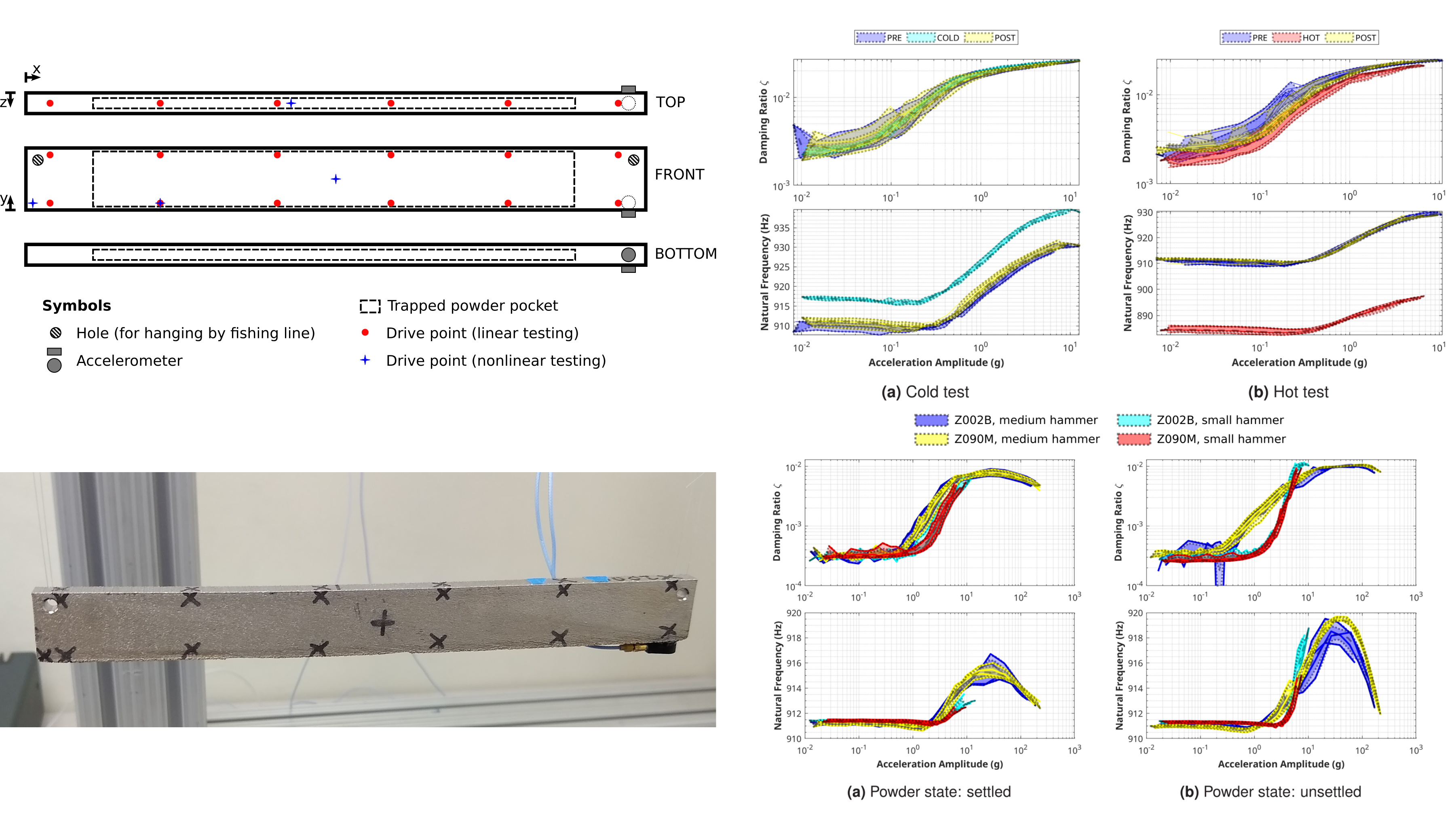
Publication: Nonlinear behavior of additively manufactured steel beams with trapped-powder dampers. (DOI).
Abstract:
Additive manufacturing has gained popularity for its ability to produce complicated geometries that distribute material optimally and allow several parts to be consolidated into one. Part consolidation often comes with a large reduction in damping, however, due to the elimination of frictional losses at interfaces between parts. This reduction of damping can be problematic in applications where resonant vibrations lead to early fatigue failure or undesirable noise emission. In recent years, a promising technique for increasing damping in parts made by laser powder bed fusion (LPBF) has been introduced, in which pockets of retained, unfused metal powder act as embedded dampers. This work presents an experimental study of the nonlinear behavior of several 316L stainless steel rectangular beams made by LPBF with embedded powder dampers. In addition to amplitude-dependent nonlinearity, a significant memory effect is observed, thought to be caused by powder settling and unsettling in response to external agitation. A procedure was developed to measure the full range of damping behavior by causing the system to transition between high-damping and low-damping states. This procedure is applied to six beams with varying pocket thicknesses, resulting in a rich dataset that provides insight into the factors that most influence the effective modal damping and natural frequency of these parts. As pocket thickness increases, the damping increases, together with the amount of nonlinearity and the variance in damping and natural frequency. This uncertainty can be reduced by controlling the amplitude range of interest, the powder state, the drive point, the impact force, and the hammer tip. The relative importance of each of these factors is quantified, and each factor is found to be significant in certain cases. Some of the parts are shown to exhibit significant modal interactions, as well as time-varying phenomena, for some modes. Additionally, a study which varied the operating temperature is presented, confirming that the behavior of trapped-powder dampers is largely temperature-independent. Implications of these findings for design and modeling are discussed.
Modal analysis of 4-story structure
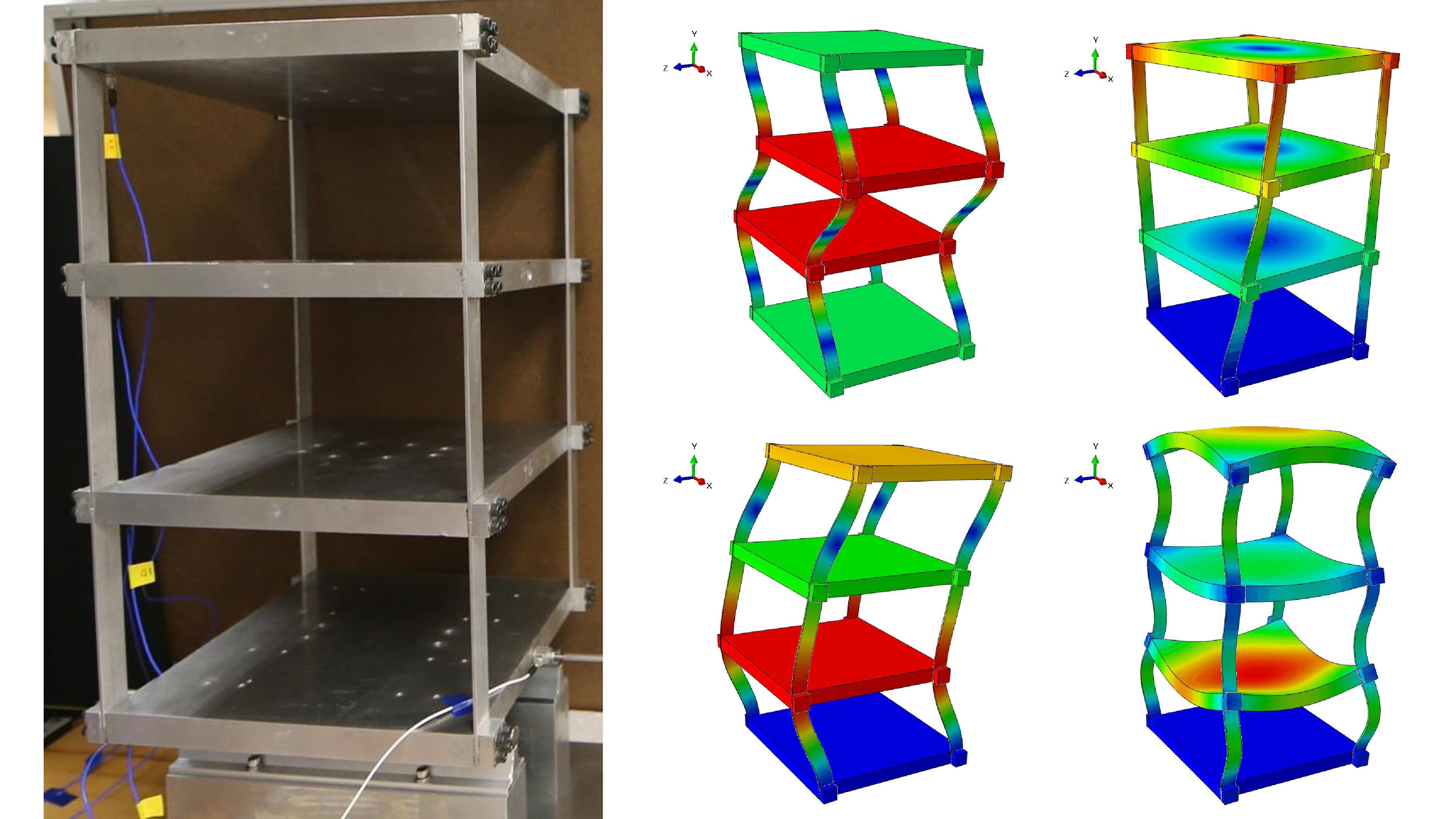
Publication: A Simplified Finite Element Joint Model Updated with Experimental Modal Features (DOI).
The 4-story Aluminum structure pictured was modeled in CAD and a linear eigenvalue modal analysis was performed to extract the natural frequencies and mode shapes. Bayesian updating was performed to minimize the error between the FEA-predicted frequencies and the experimentally measured frequencies.
The novel aspect of this work was in the methodology for modeling the bolted connections. Details can be found in the conference paper, published in the proceedings of SEM IMAC XLI.
Mechanical hand CAD project
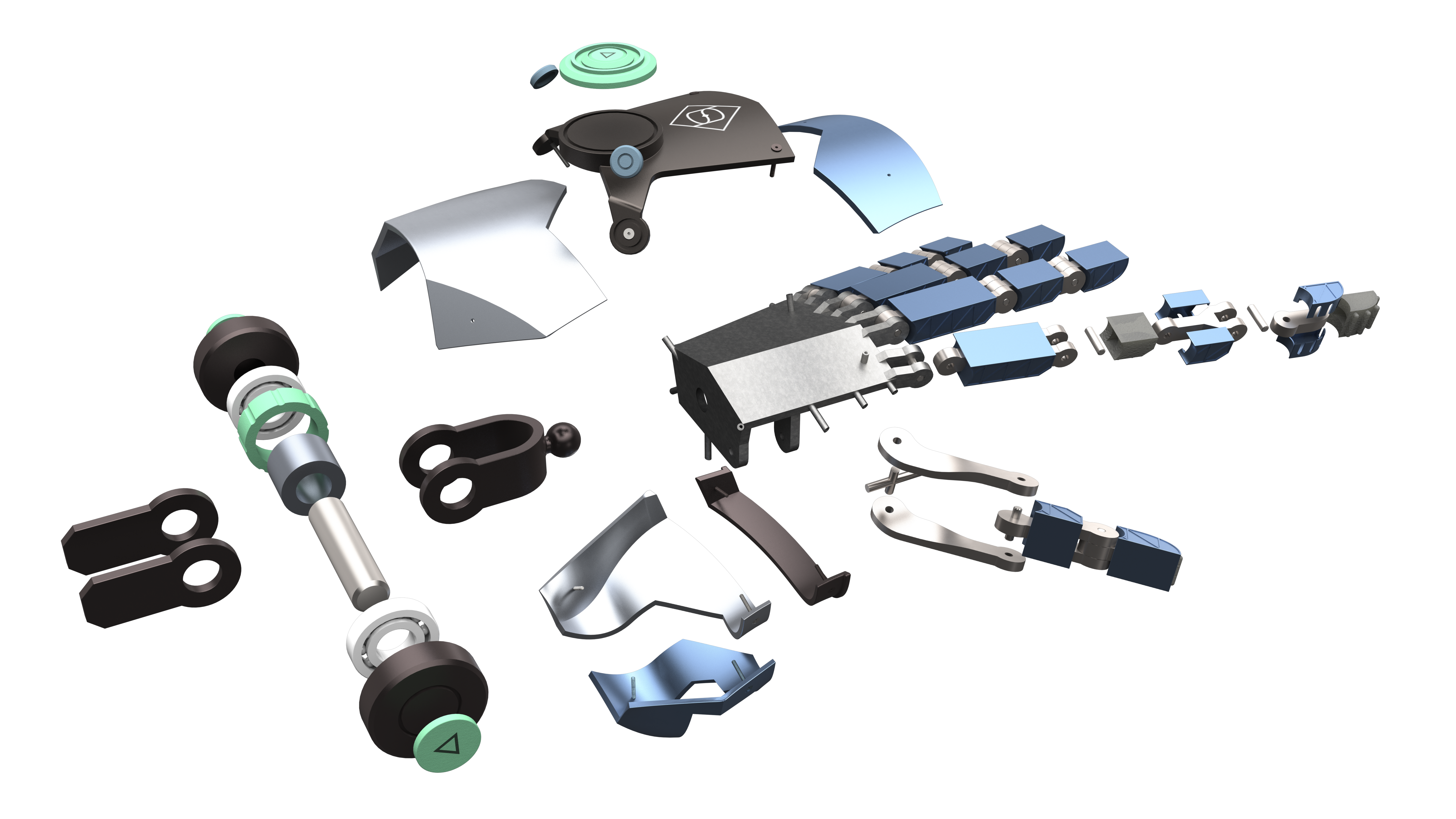
This CAD model was based on an artistic rendition of a mechanical hand.
The two bearings were imported from McMaster-Carr, but all other parts were created in Solidworks with a combination of solid and surface modeling. A design table was used to generate each of the finger segments as configurations of the same model.
Nonlinear resistor network simulation software
Code repository: GitHub.
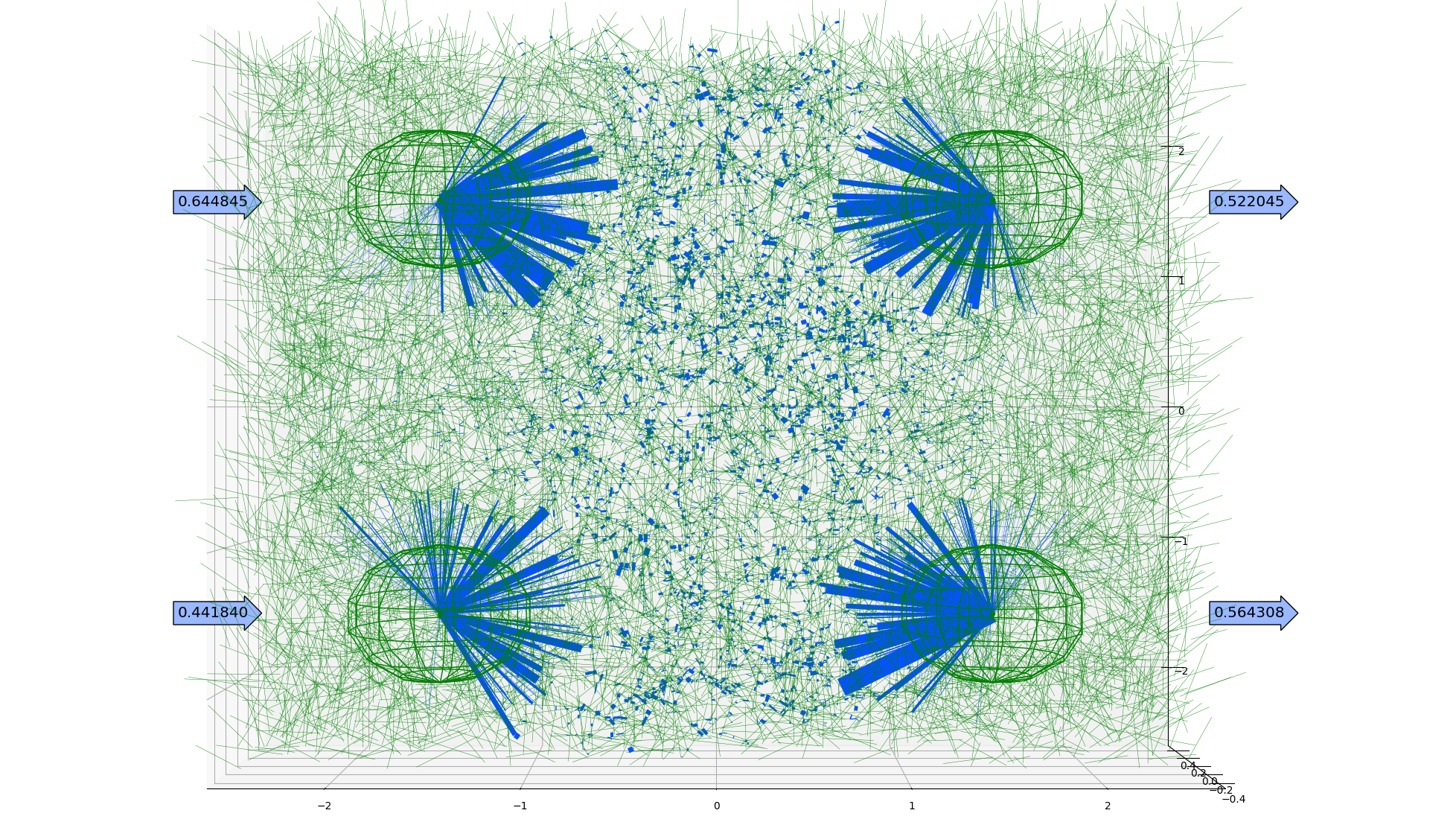
The goal of this project was to create a neuromorphic circuit capable of being trained as an artificial neural network. The chips were comprised of Nickel nanostrands suspended in epoxy, and header pins served as inputs and outputs. The strategy was to weaken undesirable connections, leaving behind the desired input-output mapping.
My contribution to the project was software for simulating nonlinear random resistor networks. The program populates a volume with nanostrands (modeled optionally as points or as 1D fibers), creates a connectivity graph based on the distances between neighboring fibers, and solves Kirchoff's laws for the steady-state voltage at every node, using the graph Laplacian matrix.
The program utilized PyTorch for GPU acceleration and was capable of simulating tens of thousands of non-Ohmic resistors.